
Confirming who does what by when helps everyone succeed. Clarity is a kindness.
In a recent workshop, I shared a case study about a great conversation that yielded no traction. Everyone could relate. Conversations that don’t move anything forward are a common productivity leak. And the fix is simpler than you think. It’s a practice I call WDWBW: Who Does What By When.
Sounds simple. And it is, if you:
- Conclude the meeting by clarifying what the next actions are, who is going to complete them and by when.
- Ensure next actions are visible. For example, displayed on a whiteboard (physical or virtual) that all meeting participants can see.
- Know what questions to ask to help clarify next steps (and actually ask them).
- Add your personal actions to your daily to-do list and deliver on them. Delivering on your part builds trust and shows integrity.
Here’s an example of the table you could use in your next meeting.
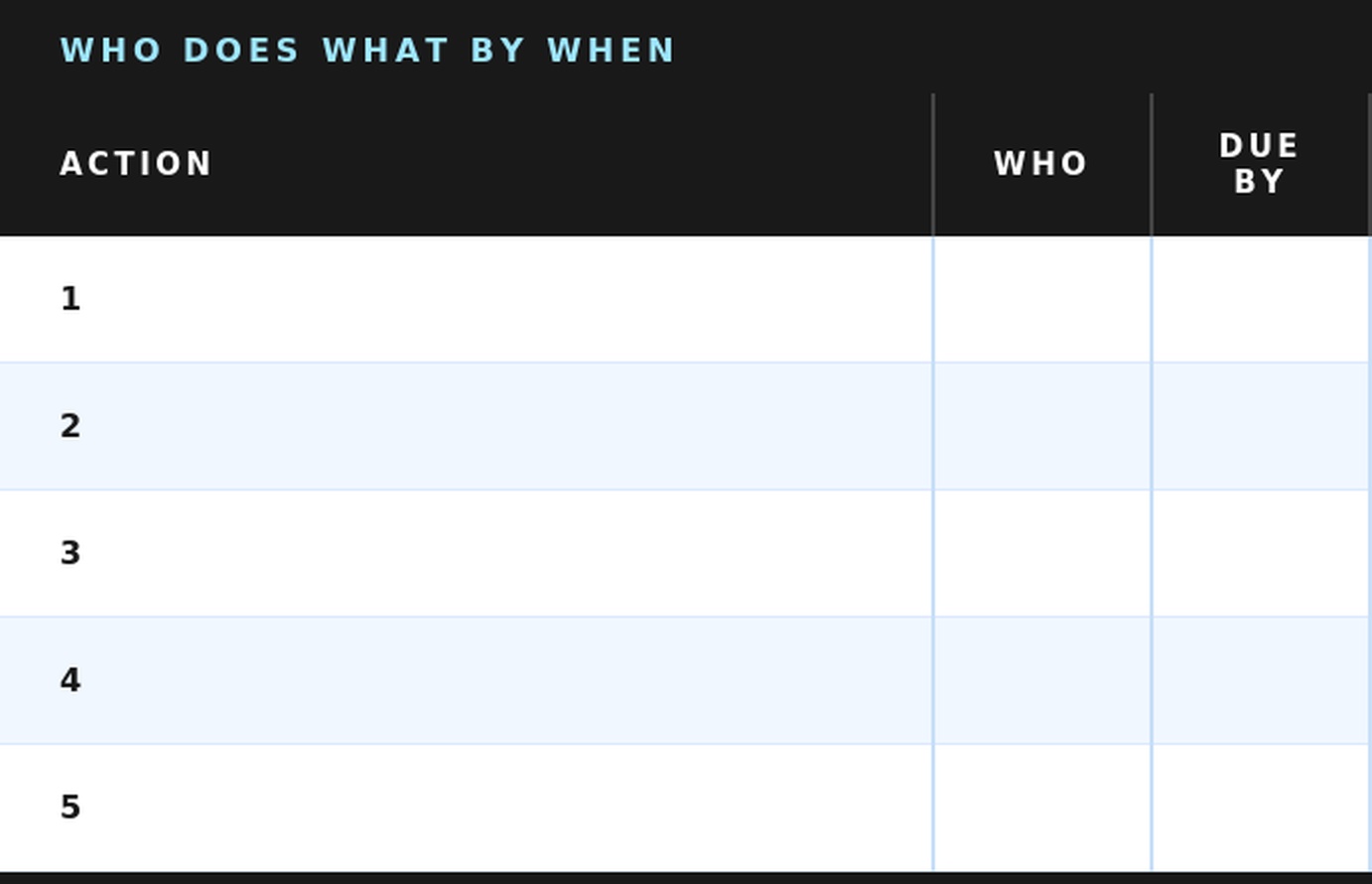
Questions to Confirm Next Steps (WDWBW)
You don’t need to be the chair or the most senior person to ask these questions. Anyone can clarify the next steps.
- Here’s what I’m hearing the next steps are…
- What are you hearing from your side?
- Who would be best placed to take that forward?
- What’s a realistic timeframe for that?
- What’s the best way to stay in touch on this?
- I’ll make a note to check in with you by…
When you first start clarifying next steps in meetings, you may feel a twinge of discomfort. That’s normal (especially if you’re not the most senior person in the room). Uncomfortable doesn’t always mean wrong. Often, it just means new. And new is where growth happens.
The more you practise it, the more natural it becomes (see the prompt below). And the more you’ll notice how much it helps everyone around you.
Try this GenAI prompt:
I’m about to run a team meeting. I want to close it with 10 minutes to clarify and document next steps — who does what by when. Before I go in, give me:
A one-paragraph mindset reset that prepares me to hold the line on this closing practice — even if the meeting runs long, even if the team resists, even if it feels awkward.
Three things I should have ready before the meeting starts to make the close easier.
The exact words I can use to transition into the closing 10 minutes — something that signals this is a normal part of how we work, not a punishment or an add-on.
Note: I’ll be using a simple four-column table — Action / Who / Due By / Done — on a whiteboard or virtual board. Factor that into your preparation advice.
Be direct. I’m not looking for motivation — I’m looking for preparation.
